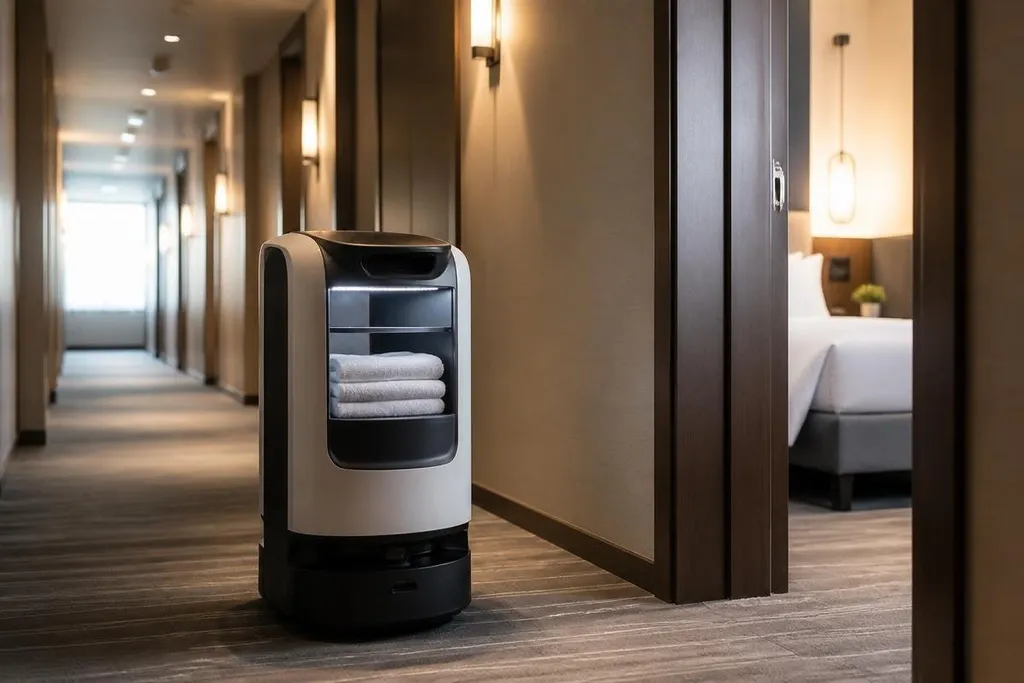
A hotel robot may deliver a towel, carry bags, or guide a guest to a room. The harder task is fitting that work into a busy property without adding staff calls, delays, or safety problems.
For hotel managers, the useful question is what task a robot can finish from start to end, regardless of how it looks.
- Guest delivery: The robot must reach the right room and confirm the handoff.
- Front desk support: Check-in machines need a clear path when a guest needs human help.
- Back-of-house work: Luggage, laundry, and supplies need safe routes away from crowds.
Where robots could help
Guest delivery is the easiest use case to understand.
A staff member loads towels, food, or toiletries into a locked compartment, enters the room number, and sends the robot through the hotel. The guest receives a call or room alert, then opens the compartment with a code.
That process could cut repeated trips from the front desk. It only works, though, if the robot can use lifts, pass through doors, avoid people, and return to its charging point without staff escort.
Luggage movement is another possible task. The robot could carry bags between the lobby, storage room, and guest floor. The hotel would need clear rules for who loads the bags, how the robot checks the destination, and what happens when a lift is busy.
Front desk work needs more care. A kiosk can collect guest details or issue instructions, but hotel stays often include problems that need judgment. A booking error, a missing bag, or a room access issue still needs a person who can understand the case and act on it.
The hotel layout decides the result
A flat-office robot may struggle in a hotel with carpets, narrow corridors, glass doors, and crowded lift areas. Floor maps also change when staff move carts, signs, or cleaning equipment into the robot’s route.
The robot needs sensors to detect people and objects. It also needs a way to stop safely when its route is blocked. A hotel should ask how staff restart a stopped robot, how long that takes, and whether guests can reach an employee without walking to the lobby.
Privacy adds another concern. Cameras and microphones may record parts of a guest’s stay, even when the robot’s main job is delivery. Hotel managers need clear rules for stored data, access to recordings, and the time before those records are deleted.
A hotel can buy a delivery robot and still pay for charging gear, lift access, software, and staff training. Reports at Robot24 can place those costs beside named machines and hotel trials before the next section counts the full bill.
The cost is more than the robot
A purchase price tells only part of the story. The hotel may also need charging equipment, lift access, network changes, software setup, staff training, and a service contract.
The main measure should be completed work. A pilot could record delivery time, staff minutes per delivery, failed trips, guest requests for human help, and the number of times the robot needs assistance. Those figures let a manager compare robot service with the current process.
A robot that completes 40 deliveries but needs a staff member nearby for every trip may not cut work. A slower robot that runs alone through quiet night hours could fit a different hotel better. The right result depends on the task, the building, and the hours of use.
I’d start with one repeatable task, such as late-night towel delivery, before putting a robot near the full guest service process.
A practical pilot checklist
Use these checks before signing a hotel robot contract:
- Name the task: Write down the exact job, start point, end point, and handoff.
- Map the route: Test doors, lifts, floor surfaces, crowds, and blocked paths.
- Count staff time: Record loading, supervision, recovery, and charging work.
- Set safety rules: Decide how the robot stops, who can restart it, and how guests get help.
- Check guest data: Ask what the robot records, where it stays, and when deletion happens.
- Set a pass mark: Choose a delivery time and failure rate before the pilot begins.
The strongest hotel robot may never greet a guest or answer a booking question. It may carry small loads through the building at hours when staff have less time, and the next useful test is whether that work still needs human help after 30 days.